

How Boutique Care Homes makes more of each day
At Brampton Manor, More Days is helping staff turn their knowledge of residents into personal activities and a clearer picture of daily life.
- HOME
- Brampton Manor, Suffolk
- GROUP
- Boutique Care Homes
- VOICES
- Valda Rayner, Head of Lifestyle and Activities · Carl Roberts, Director of Sales and Marketing
- FOUNDERS
- Mark Hazelby and Warren Hobden, More Days Studio
For four years after his wife died, he was lonely at home. When he finally came to Brampton Manor for respite care, he came reluctantly.
The team worked to draw him into things he had enjoyed before, and into the company of other people. Then, at his 101st birthday celebration, he made a speech.
“He now feels that this is his home,” says Valda Rayner, Head of Lifestyle and Activities at Brampton Manor Boutique care home in Suffolk. “He’s looked after. He’s respected. He’s made friends, and he’s no longer lonely.”
Valda has worked in care for 26 years. She began with a part-time community job while her children were young, later discovering a talent for activities. She describes residents as her extended family.
“This is just a new chapter in your life,” she tells people arriving at the home.
That belief runs through Boutique’s approach to life enrichment. Its Director of Sales and Marketing, Carl Roberts, left work in the City for a role in care eight years ago. Community work had shown him how much he enjoyed helping people.
“For us, it’s about making sure that every day our residents are thriving, in whatever way thriving looks like to them,” he says.
Boutique already had that ambition when it met More Days. What it wanted was a better way to share what staff knew, understand what made a difference and build on it.
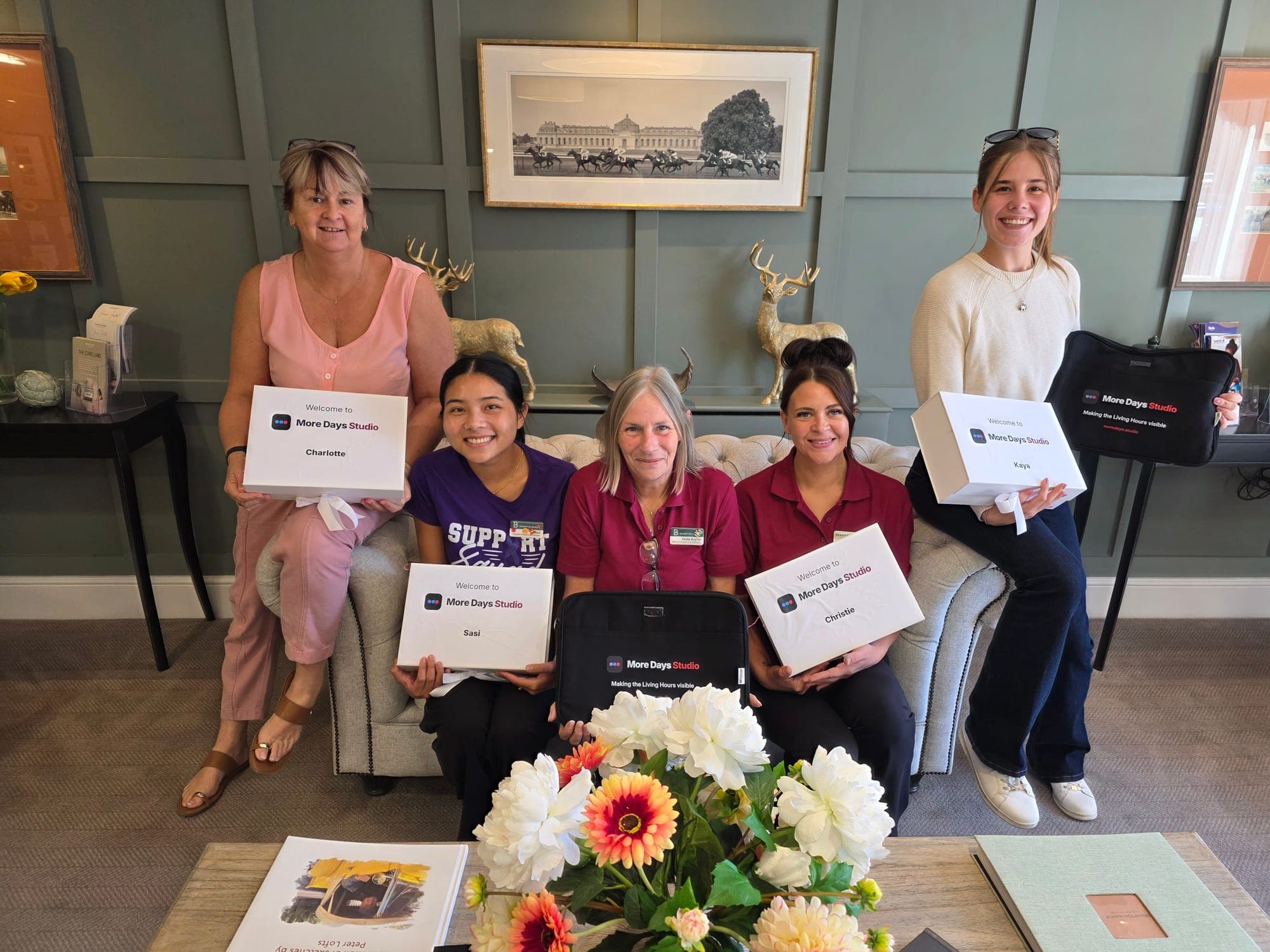
Understanding what makes a good day
Before More Days, much of that understanding stayed with the people running an activity. They watched expressions, asked residents how they felt and passed information to colleagues. As it travelled between staff, Carl says, detail could get lost.
More Days Studio helps staff plan activities around a person’s interests. Staff record how the person responds. Those observations build a picture over time, giving colleagues more to work with when deciding what to offer next.
Valda gives an example from that morning. She had asked a colleague to spend time with individual residents, using the system to suggest activities tailored to each person. It provided instructions, conversation prompts and possible adaptations.
“So anybody can pick up this system and go and do an activity,” she says.
For Carl, this matters when an experienced colleague is away and someone who knows the resident less well takes over. Their shared knowledge remains available.
“It gives us more time back with residents,” he says.
The system also helps capture encounters that might otherwise go unrecorded – a greeting in a corridor, or a five-minute conversation at a doorway.
“It’s actually giving us the ability to show the things that other people don’t see,” says Valda.
A problem that began at home
For More Days co-founder Mark Hazelby, the need for meaningful company was personal. His mother had Alzheimer’s disease and loved gardening. As her care needs grew, he looked for someone who could spend time with her, perhaps talking about flowers.
He and Warren Hobden had met at the Department for International Trade. Warren led a product team. Mark led a team designing services around the people using them. They wanted to apply those skills to a business with a public purpose.
For Warren, the question is personal too. What will matter to any of us as we grow older? “The things that make us who we are today … they’ll still be there,” he says.
As they explored a service that could match people with companions, another family experience compounded the problem. Mark’s aunt, who also had Alzheimer’s disease, moved into a care home.
She had led an active public life, including serving as a mayor, and had studied fine art and Italian. On arrival, she asked what was happening. The answer was bingo.
“I hate bingo. Do you do Italian?” Mark recalls her asking.
Her family arranged Italian activities themselves. Mark felt she was becoming more withdrawn. For him, knowing someone’s past was a way to help them feel they belonged in the present.
A conversation with an experienced care home manager helped Mark and Warren see a bigger problem. Activity teams needed better tools to understand and support each resident.
Their idea turned into More Days Studio. Later, Mark’s aunt moved to a Boutique home, where she remains. That family connection brought the founders into contact with Carl.
Boutique helped refine the product through an early pilot and its subsequent use at Brampton Manor. Both founders describe that partnership as key to its development.
Keeping the person in charge
More Days sets out its thinking in its white paper, The Good Day Hierarchy. Drawing on Maslow’s hierarchy of needs and other care frameworks, it argues that belonging, identity and purpose deserve attention alongside physical wellbeing and safety.
Its Journey Score brings staff observations together to help show how residents are doing over time. The paper describes it as a way to structure staff judgement, rather than a clinical assessment. Studio works alongside existing care records. More Days says homes using Person Centred Software can also send session records back to their care records as notes.
At Brampton Manor, Valda is clear that relationships remain essential. Staff know the people behind the information, and decide whether a suggestion makes sense.
One that morning proposed a garden walk. It was pouring with rain.
Suggestions can be changed or dropped. So can plans that a resident simply does not want to follow. Valda describes one person who regularly declines invitations to join in.
“But that’s their choice,” she says.
Recording those responses helps the team understand what to try next. Respecting a decision to stay out of an activity is part of knowing the person, too.
- 5Purpose and joy
- 4Identity and significance
- 3Belonging and connection
- 2Safety and comfort
- 1Physical wellbeing
What Boutique has learnt
The partnership is still developing. Boutique was preparing its formal impact reports when we spoke. Carl’s early assessment rests on what he sees in daily practice – staff embracing the system and using its information to plan activities.
Valda values the opportunity to help refine the product with her feedback.
A family portal was still awaiting rollout at Boutique. The team hopes it will help relatives share memories and interests, and stay involved when they live far away.
For those considering More Days, the immediate case is practical – help staff plan personal activities, make their knowledge available to colleagues and record how residents respond. Carl judges technology by whether it makes residents’ lives better and gives staff more time with them.
Valda’s advice to another activities lead is forthright: “I know it’s a bit of a pain to start with when you’re learning a new technology, but it’s worth it…it’s a game changer.”
The reason to persevere is there in the birthday speech of a man who once arrived reluctantly. He has friends. He feels respected. He calls it home.
See More Days in practice
Meet Mark and Warren at the Care Forum, or book a 30-minute More Days Studio walkthrough. Bring one of your homes in mind and explore how it could work for your team.